
The Eldorado and the Rise and Fall (and Rise) of Cadillac
Source: Darin Schnabel/RM Sotheby’s
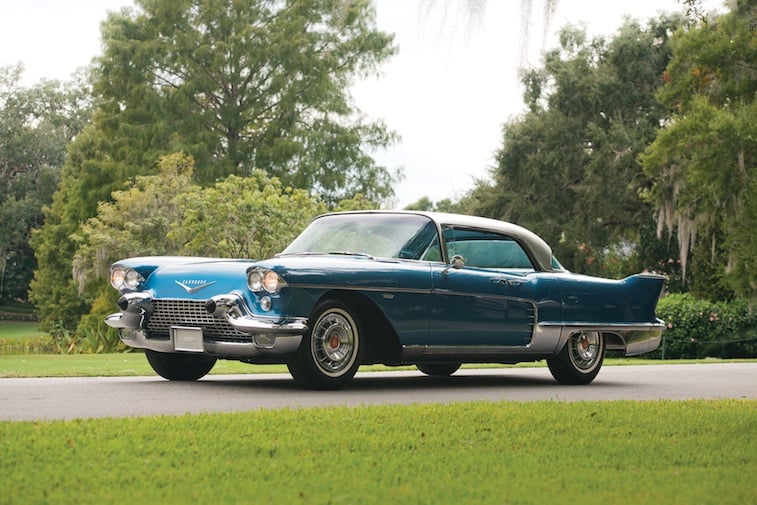
The Cadillac Eldorado captured the country’s imagination in 1952 as a cutting-edge concept made into a reality. And 50 years later, it was unceremoniously axed to make room for the Chevy HHR, after spending its final years appropriately called the Eldorado Touring Coupe, or ETC. What happened in those 50 years tells the story of Cadillac (and GM as a whole) better than almost any other car to ever come from the company.
Source: Cadillac
Source: General Motors
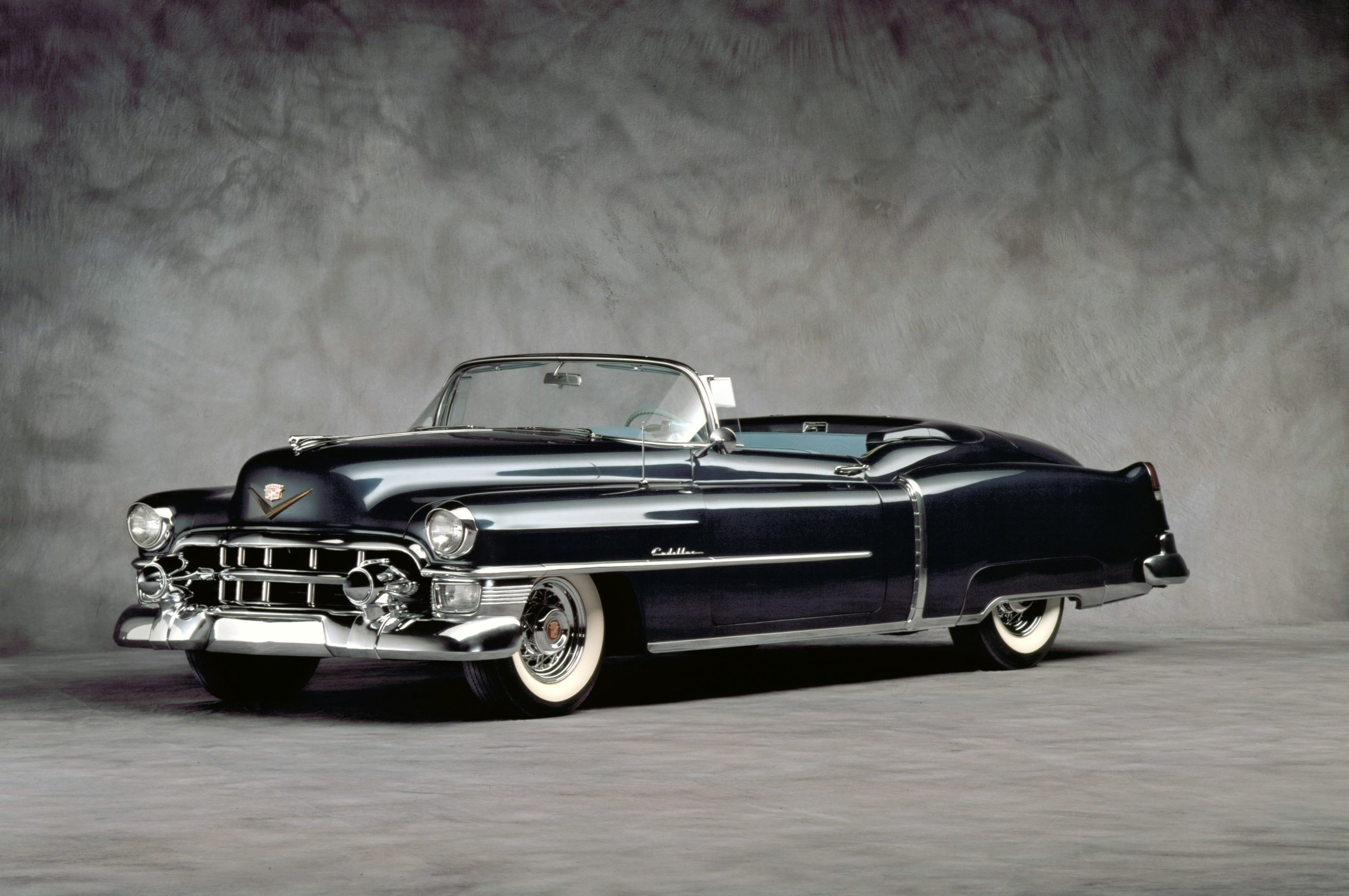
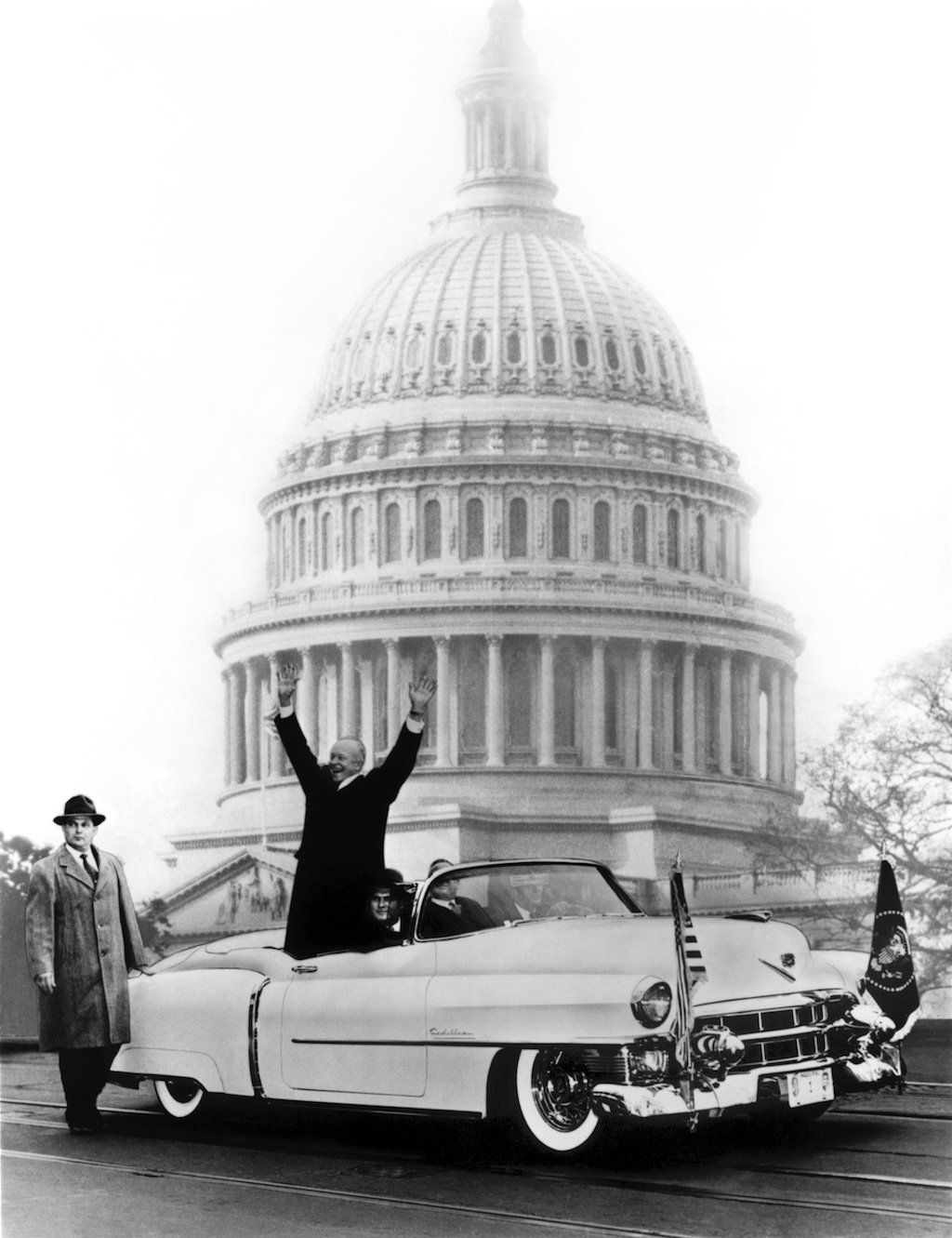
There was no Motorama in 1952, but the company announced that it would launch a trio limited-edition convertibles based on these dream machines for 1953: The Oldsmobile 98 Fiesta, Buick Skylark, and Cadillac Eldorado. By taking America’s hero-president to Pennsylvania avenue that day 1953, Cadillac had executed one of biggest public relations coups in automotive history.
Starting at $7,750 (over $68,000 today) and only available as a convertible, the Eldorado was the most expensive Cadillac on the market. It had cutting-edge standard features like power windows, a signal-seeking radio, windshield washers, and a heater (a rarity on a convertible). The only options available were wire wheels and air conditioning, and it was only available in four exclusive colors, with either a black or white top.
And with styling by GM design chief Harley Earl, its wraparound windshield, acres of chrome, jet-age “Dagmar” bumpers, long and low profile, and tail fins seemed to set the agenda for automotive styling for the rest of the decade.
The company only sold 532 Eldorados in 1953, but it was enough to establish a prestigous new nameplate for the brand. In ’54, the Eldo lost its exclusive sheetmetal and was integrated into the rest of the Cadillac lineup, allowing it to sell in larger numbers. In ’55, the model got exclusive rear sheet metal with more aggressive fins, and a hardtop was introduced: The Eldorado Seville.
Source: Cadillac
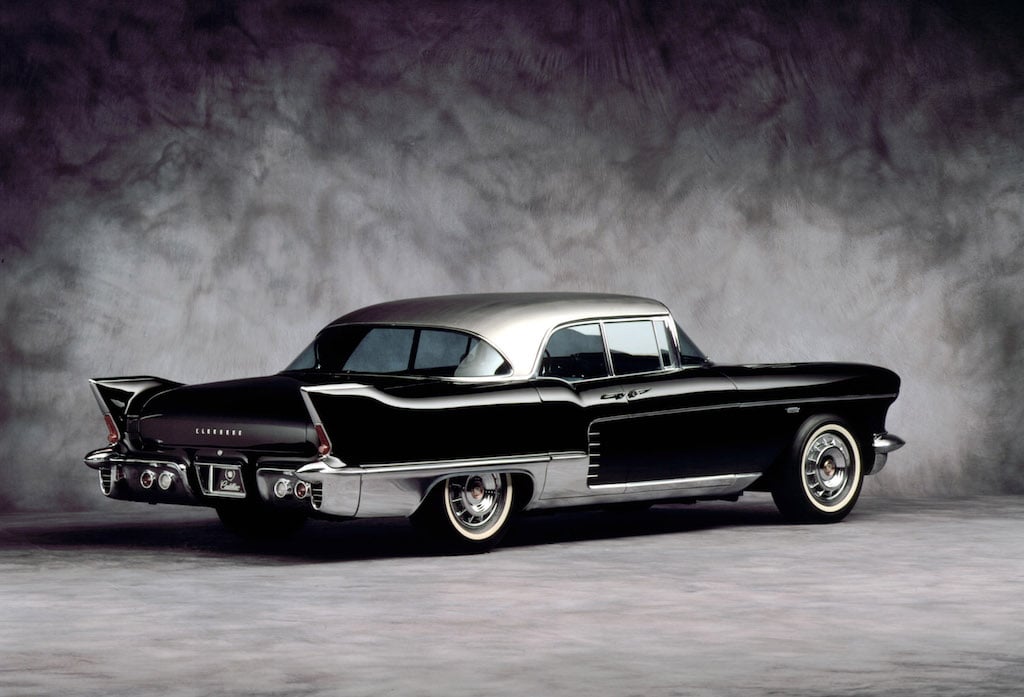
For that money, customers (among them Frank Sinatra, Coco Chanel, Bob Hope, and Aristotle Onassis) got a self-leveling air suspension, power seats with (memory settings), forged aluminum wheels, cruise control, power windows and locks, and a host of other amenities that would take decades to show up on lesser models.
As the 1959 models appeared with their sky-high tailfins, Brougham production was shifted to Pininfarina in Italy, where the cars were built in the same factory as contemporary Ferraris and Alfa Romeos (an arrangement that Cadillac would repeat nearly 30 years later with the Allanté roadster).
In 1961, as fin height fell back to earth, so did the Eldorado. Production returned to the U.S., and it became a model under the de Ville lineup. The car’s profile continued to fall throughout the early ’60s, eventually becoming a trim level for the range-topping Fleetwood model in 1965. But by then, GM had big plans for the Caddy, and for 1967 it would return to the forefront of the automotive world.
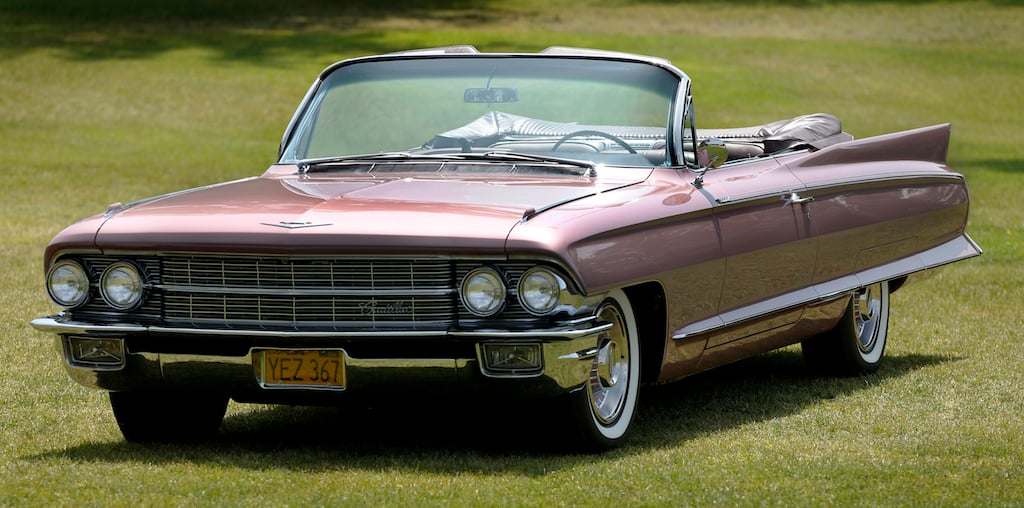
Source: Cadillac
For ’67 the Eldorado was moved to the E-Body platform, meaning it would share its architecture with the Oldsmobile and the Buick Riviera. But instead of sticking with rear-wheel drive like Buick, Cadillac opted to follow Olds, modifying the brand’s front-wheel Unified Powerplant Package to accept its 429 cubic inch V8.
Where the Toronado was science fiction and chrome, the Eldorado was a modern interpretation of American style. With hideaway headlights, razor-thin tail fins, and upright angles, the muscular and restrained coupe was a massive hit for the brand, with nearly 20,000 sold in its first year alone.
Disc brakes became standard in ’68, and the hideaway headlights disappeared for ’70, but by then, the Eldorado had already reestablished itself as a major player in the Cadillac lineup, especially as a new decade dawned and the Personal Luxury Coupe segment it helped create began to sweep Detroit.
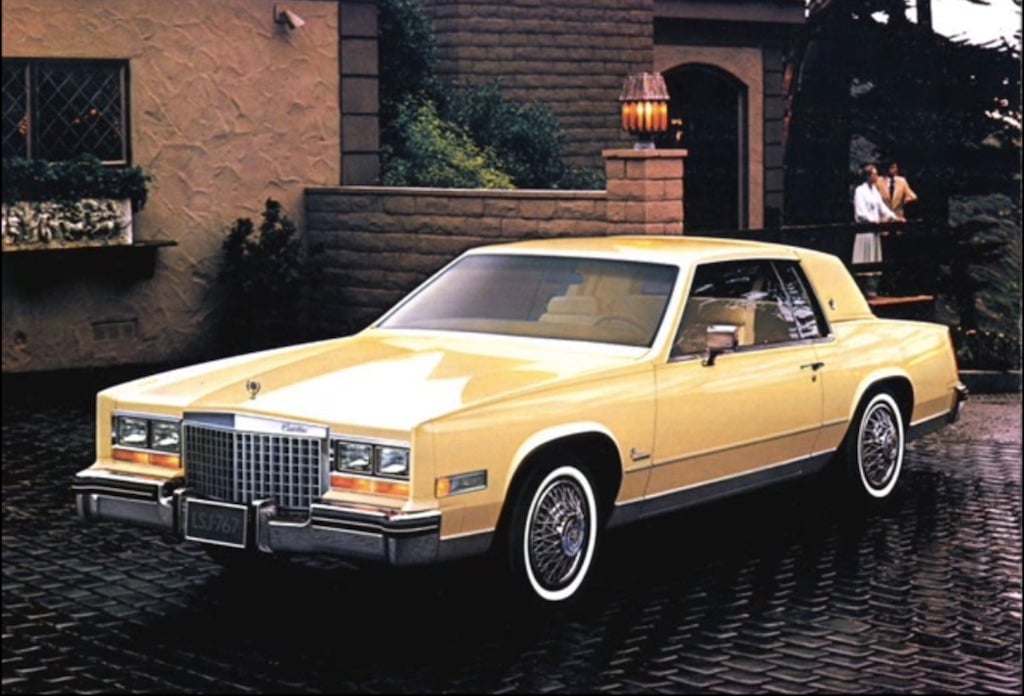
The restrained lines of the sixth-generation car disappeared in 1971 as a bigger, baroque Eldorado was introduced. It retained that car’s front-wheel drive architecture, but with a longer wheelbase, massive overhangs, heavy chrome trim, and acres of leather and fake wood inside, it perfectly captured the excess of the ’70s.
It was also fantastically popular; by 1973, it accounted for one-sixth of Cadillac’s sales. In 1975, it received a facelift, with a sharper front end and four rectangular headlights. It returned to the forefront of the American auto industry in 1976, as it became the last convertible manufactured in America due to rising safety standards. Collectors and speculators snapped up 14,000 convertibles in 1976 alone after GM announced that the ragtop was officially going extinct.
Source: YouTube
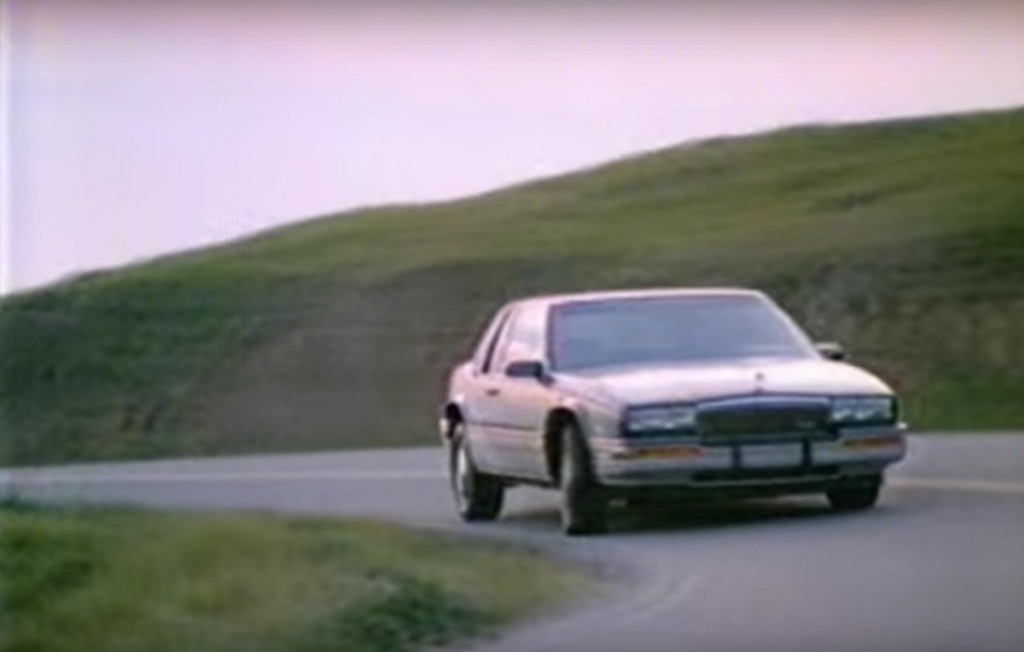
The eighth-generation car was meant to compete with rising safety and emissions standards, and compete with the rising tide of imports. It soldiered on until ’85, when another round of GM downsizing saw the Eldorado shrink another 16 inches, making it shorter than the contemporary Chevy Celebrity. Despite clean-sheet styling, a V8 engine, and all digital instrumentation, the ninth-generation Eldorado was a unmitigated sales failure.
Sales fell over 60% in 1986. By then, front-wheel drive was no longer the status symbol it was in the 1960s, and the indifferent build quality and bizarre mixture of baroque plastic trim and chintzy fake wood inside did little little to pull buyers away from emerging luxury offerings from BMW, Mercedes, and Audi. And with its $24,250 price tag (around $52,000 today), it was becoming an increasingly tough sell for Cadillac dealerships as it began losing younger buyers.
Source: YouTube
As Cadillac’s reputation sunk throughout the decade, the Eldorado hung on, getting nominal upgrades every year as the price climbed and sales dropped. In 2002, Cadillac announced the end of the Eldorado line with the “Collectors Edition:” 532 red and white coupes to mirror the run of the original ’53 cars. Perhaps unsurprisingly, they came and went with little fanfare.
In the 14 years since, Cadillac has undergone an improbable transformation and is at the threshold of retaking its place on the global luxury stage. Today, the ATS coupe largely holds the spot once occupied by the Eldorado (albeit with rear-wheel drive), and the brand can once again compete on the world stage. The classic Eldorados of the ’50s and ’60s are now accepted as some of the finest American luxury cars of their eras, representative of the time when everything Cadillac touched seemed to turn to gold.

No comments:
Post a Comment